"Eye level is buy level" – A merchandising maxim in modern trade
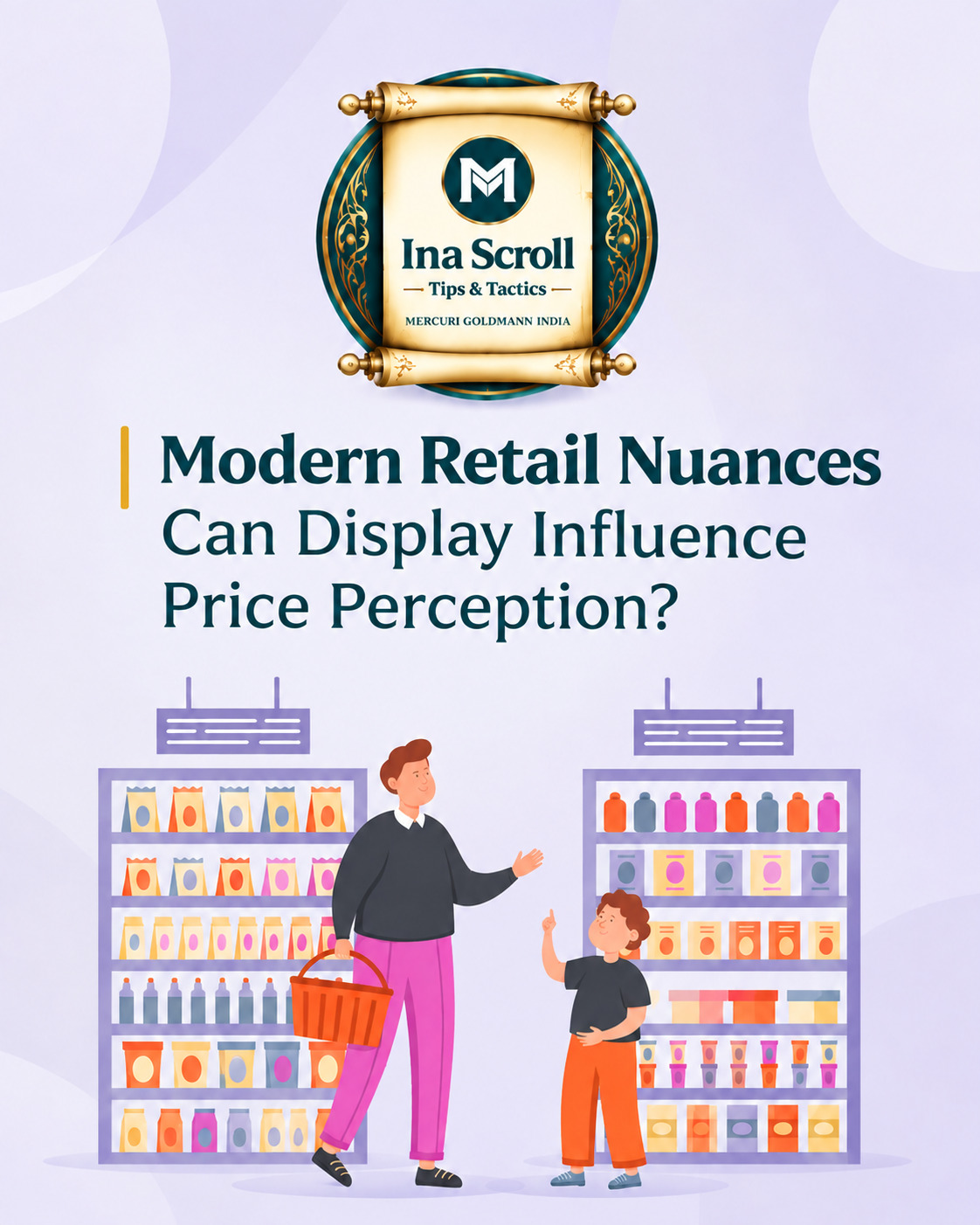
You are in a supermarket, looking for millet based cereal foods. This is something you have never bought before. So, as you walk past the shelves in the ready foods section, chances are that you may end up buying the first label that catches your eye. Merchandising veterans in modern trade have a maxim that explains this – “Eye level is buy level”.
INSEAD study says display can influence price perception too
A study published in INSEAD Knowledge (May 2026) led by INSEAD’s Associate Professor of Marketing, Abhishek Borah and co-authors found that physical positioning of display not only shapes first impressions, but it also influences, surprisingly, perceptions formed about price, even when there is no price tag.
Methodology used for the study
Prof Borah’s group ran 8 controlled experiments that deployed several hundred university students. The INSEAD article explains – “They used eye-tracking equipment to record precisely where and for how long participants looked. Turning bias was induced through tasks including maze navigation, reading exercises, chair rotation and angled product displays”.
What insights did the study uncover?
Major insights uncovered in the study included:
- Where a product is physically positioned can potentially influence perceptions about price, even in the absence of a price tag
- The direction in which the shopper is moving provides measurable clues on the willingness to pay
- Display positioning on the shelf is not just a branding tool. It can double as a pricing tool too
- Need for frequent offers and sales can be reduced with subtle visual merchandising cues lifting value
- Shoppers walking clockwise or turning to the right, have their eyes primed to look downwards
- Shoppers moving counterclockwise or turning to the left, have their gaze drifting upwards
All this has measurable impact on a shopper’s willingness to pay:
- A clockwise-moving shopper tends to assign a relatively higher value on a product that sits on the lower shelf
- A counterclockwise-moving shopper would possibly value the same product more when it’s placed on the upper shelf
Action Tips
- Channel your shopper’s attention in the direction you want, through store entry design, floor plans and product fixture angles
- Be mindful that price perception may be influenced by the relative height at which products are displayed
- Arrange your display, keeping in mind that attention works in two stages – where shoppers first look, and how long they stay looking. Both independently amplify price perception
- Help shoppers browse at leisure. Time pressure dilutes display effect. When shoppers are in a hurry, spatial cues lose their influence. So, it helps to lower speed of browsing through display design, piped music or pacing cues
The INSEAD Knowledge Research article How Much Is That Display in the Window? can be read here
------------------------------------------------------------------------------------------------------------------------------------------
InaScroll brings to the sales fraternity, actionable ideas, tools and frameworks from ivy league journals, academia and books of repute. Mercuri India acknowledges the authors and the publications for their knowledge and valuable insights.