How you can apply Data Analysis to Sales Work
Goal of analysis is never just a number
Data Analysis is a highly valuable cognitive skill for Salespeople. Harvard Professor Janice Hammond offers valuable pointers to how one can develop this skill. He suggests that the goal of data analysis should be to trigger the right questions. When we analyse data, we shouldn’t just say “Oh, the answer is 15. I’m done”
We should rather be asking - What can I learn from the results of this analysis about things like:
- underlying context (b) competition (c) Customers (d) Suppliers
And if you are managing sales, you should ask things such as:
- “How do the results of this analysis validate or reinforce hypotheses I had before I did the analysis?’’
- “What did I learn that negates or questions the assumptions I made before doing the analysis?”
Every analysis should be a feedback loop that deepens your learning

Get comfortable with all types of analytics
Harvard Business School’s Beginner’s Guide to Data & Analytics lists out 4 types of analytics to extract meaningful insights. These insights can in turn be used for data driven selling and decision making
- Descriptive analytics – Data analysed to examine, understand, and describe something that’s already happened
- Diagnostic analytics – These deep dive to understand the “why” behind what happened.
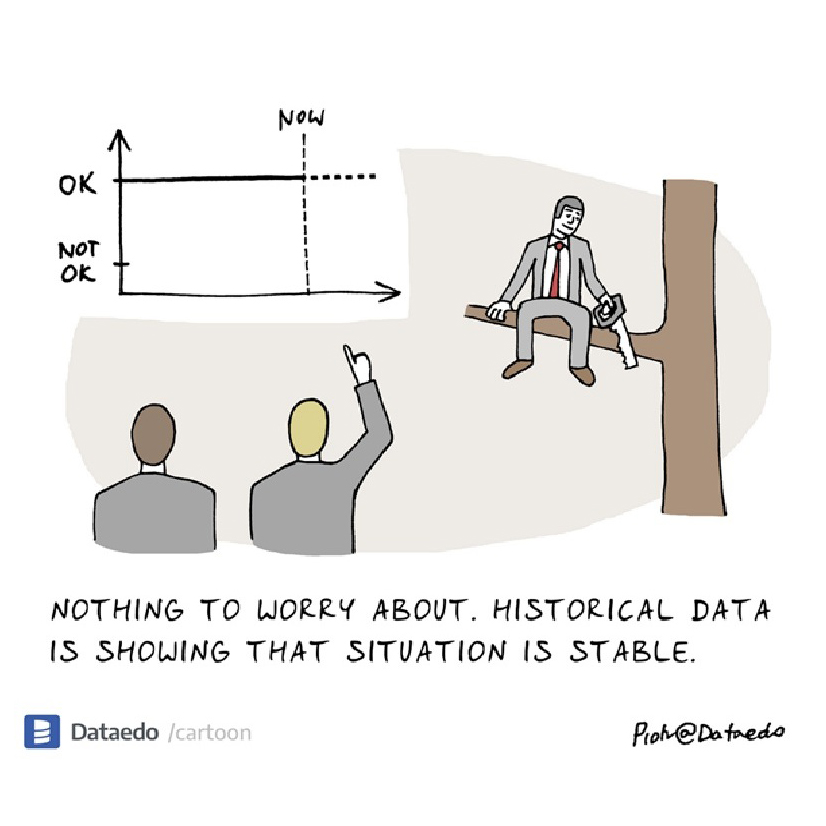
- Predictive analytics – These analytics draw on historical data, past trends, and assumptions to answer questions about what might happen in the future.
- Prescriptive analytics – Are helpful in identifying specific actions to reach future targets or goals
How can you extract better insights from the data you have
Thomas H Davenport, in a HBR article titled Keep Up with Your Quants advises that we ask the following 7 questions to tease insights out of the data that we pick up for analysis:
- What was the source of your data?
- How well do the sample data represent the population?
- Does your data distribution include outliers? How did they affect the results?
- What assumptions are behind your analysis? Might certain conditions render your assumptions and your model invalid?
- Why did you decide on that particular analytical approach? What alternatives did you consider
- How likely is it that the independent variables are actually causing the changes in the dependent variable?
- Might other analyses establish causality more clearly?
Answers to each of these questions will give us insights about the quality and reliability of the conclusions we reach from our analysis. If these questions throw up doubts or more questions, then it may be time to reset some of the analytical parameters
With consistent practice, data analysis for insights is a learnable cognitive skill that can be a valuable addition to your sales professional’s toolkit.
“Data beats emotions.”
— Sean Rad, Tech entrepreneur and Founder of Tinder